How Inflation Actually Works (Explained Simply)
By Rylee Terry on August 3, 2026
Why prices don’t stay the same
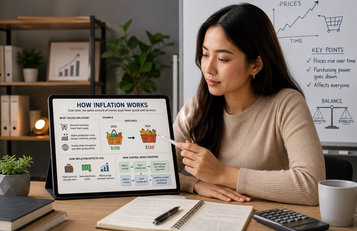
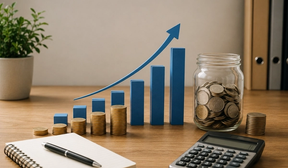
Have you ever noticed that groceries, restaurant meals, or movie tickets cost more today than they did a few years ago? That gradual increase in the prices of goods and services is known as inflation.
Inflation is a normal part of most modern economies. Moderate inflation often accompanies economic growth, but when prices rise too quickly, it can reduce people’s purchasing power and create financial challenges for households and businesses alike.
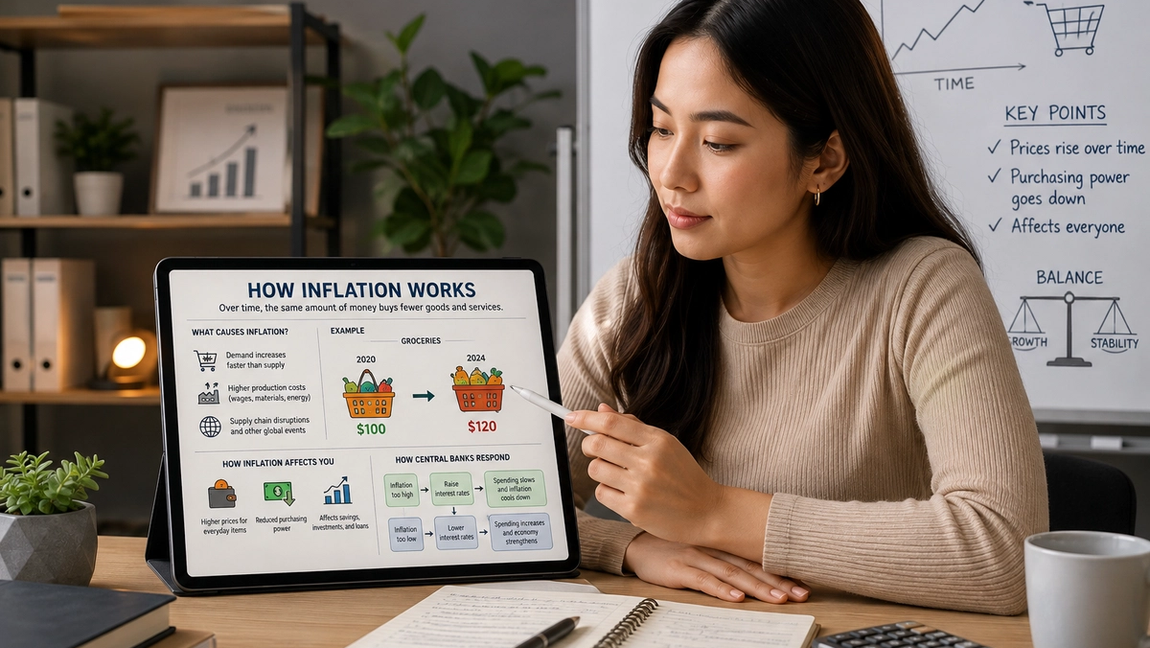
Although inflation is discussed frequently in the news, its underlying concept is surprisingly straightforward: inflation means that, over time, the same amount of money buys fewer goods and services than it did before.
Understanding how inflation works helps explain changes in everyday expenses, wages, savings, and interest rates.
What causes inflation?
Inflation can occur for several reasons, but it generally happens when demand for goods and services grows faster than the available supply, or when businesses face higher production costs.
One common cause is demand-pull inflation. When consumers have more money to spend and demand increases rapidly, businesses may raise prices because more people are competing to buy the same products.
Another cause is cost-push inflation. If the cost of raw materials, energy, transportation, or wages increases, businesses often pass part of those higher costs on to customers through higher prices.
Inflation can also be influenced by global events such as supply chain disruptions, natural disasters, geopolitical conflicts, or changes in energy prices, all of which can reduce supply and increase production costs.
In reality, inflation often results from several factors occurring at the same time.
How inflation affects everyday life
Inflation influences nearly every aspect of personal finance.
When prices rise faster than wages, households may find that their income no longer stretches as far as it once did. Everyday necessities such as food, housing, transportation, and healthcare become more expensive, reducing purchasing power.
On the other hand, moderate inflation can benefit certain borrowers because loans with fixed interest rates are repaid using money that may be worth slightly less in the future.
Businesses are also affected. Rising costs may reduce profits unless companies increase their prices, improve efficiency, or find ways to lower expenses.
Investors pay close attention to inflation because it can influence the value of stocks, bonds, real estate, and savings over time.
For this reason, inflation is one of the most closely monitored economic indicators worldwide.
How central banks try to control inflation
Most countries rely on central banks to help maintain stable prices.
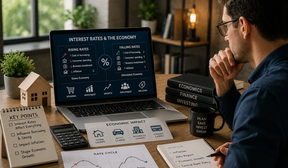
One of their primary tools is adjusting interest rates.
When inflation rises too quickly, central banks may increase interest rates. Higher borrowing costs encourage households and businesses to spend less and save more, reducing demand across the economy and helping slow price increases.
When inflation is very low or the economy is weakening, central banks may lower interest rates to encourage borrowing, investment, and consumer spending.
The goal is not to eliminate inflation entirely but to keep it at a stable and predictable level that supports sustainable economic growth.
Finding the right balance is one of the central bank’s most important responsibilities.
Inflation isn’t always bad
The word “inflation” often has a negative reputation, but moderate inflation is generally considered a normal feature of a healthy economy.
Steady inflation can encourage businesses to invest, support wage growth, and motivate consumers to spend rather than indefinitely postponing purchases.
Problems arise when inflation becomes either too high or too low. Rapid inflation can reduce purchasing power and create economic uncertainty, while prolonged periods of falling prices, known as deflation, can discourage spending and slow economic activity.
Ultimately, inflation measures how the overall price level changes over time and reflects the purchasing power of money. While rising prices affect consumers, businesses, investors, and governments in different ways, moderate inflation is a normal part of a growing economy. Understanding how inflation works helps explain why prices change, why central banks adjust interest rates, and why managing inflation remains one of the most important goals of economic policy.