How Interest Rates Actually Affect the Economy
By Bailey Walls on August 3, 2026
Why interest rates matter to everyone
Interest rates are one of the most powerful tools in the economy, yet many people only notice them when taking out a mortgage or seeing changes in their savings account.
In reality, interest rates influence nearly every part of economic life. They affect how much people spend, how much businesses invest, how affordable loans become, how financial markets perform, and even how quickly prices rise.
Because of this, central banks use interest rates as one of their primary tools for managing economic growth and controlling inflation.
Understanding how interest rates work helps explain why changes announced by central banks often make headlines around the world.
What is an interest rate?
An interest rate is the cost of borrowing money or the reward for saving it.
When you borrow money from a bank, you pay interest in addition to repaying the amount you borrowed. When you deposit money into a savings account, the bank pays you interest as compensation for allowing it to use your funds.
Central banks influence the economy by adjusting key policy interest rates, which affect the rates commercial banks charge consumers and businesses.
Although many different interest rates exist throughout the financial system, they generally move in the same direction over time.
What happens when interest rates rise?
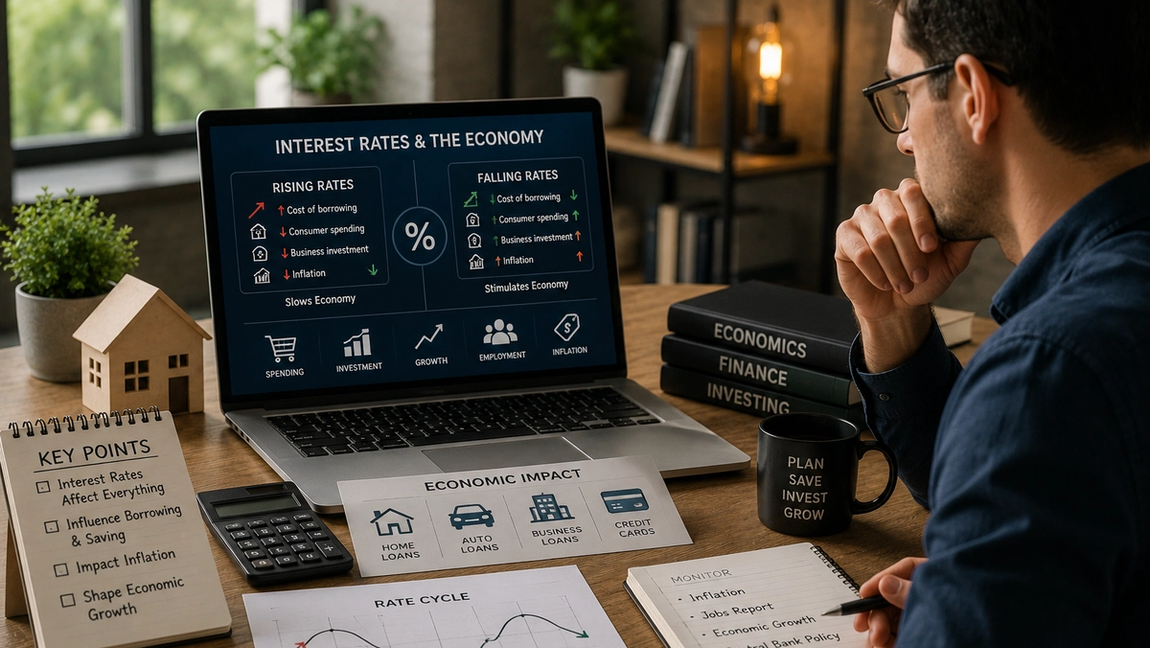
When central banks increase interest rates, borrowing becomes more expensive.
Higher mortgage rates make buying homes less affordable. Car loans become more costly. Businesses may postpone expanding their operations because financing new projects requires paying higher interest.
At the same time, saving becomes more attractive because banks often offer higher returns on savings accounts and certain fixed-income investments.
As borrowing slows and consumers spend less, demand across the economy begins to cool. This slower pace of spending can help reduce inflation by easing pressure on prices.
While higher interest rates may slow economic growth in the short term, they are often used to prevent the economy from overheating and to keep inflation under control.
What happens when interest rates fall?
Lower interest rates have the opposite effect.
Borrowing becomes cheaper, making it easier for households to finance homes, vehicles, education, and other major purchases. Businesses can invest in new equipment, hire more employees, or expand their operations at a lower financing cost.
Because saving typically earns lower returns during these periods, people and businesses may be more willing to spend or invest their money instead.
This increase in borrowing and spending stimulates economic activity, often leading to stronger business growth and higher employment.
However, if interest rates remain very low for too long, increased demand may contribute to rising inflation as consumers compete for limited goods and services.
Finding the right balance is one of the biggest challenges for central banks.
Why financial markets react to interest rates
Interest rate decisions also have a significant impact on financial markets.
Stock prices often respond because interest rates influence corporate profits, borrowing costs, and investors’ expectations about future economic growth. Higher rates can reduce business earnings and make stocks less attractive compared with lower-risk investments, while lower rates may encourage investment in equities.
Bond markets are also closely linked to interest rates. Generally, when interest rates rise, existing bond prices tend to fall because newer bonds offer higher yields. Conversely, when interest rates decline, existing bonds with higher interest payments often become more valuable.
Exchange rates between currencies may also change as international investors move money toward countries offering relatively higher interest rates.
Because interest rates affect so many areas simultaneously, even small policy changes can influence global financial markets.
The balancing act of economic policy
There is no perfect interest rate for every situation.
Central banks constantly evaluate inflation, employment, economic growth, consumer spending, and financial stability before deciding whether to raise, lower, or maintain interest rates. Their goal is to support sustainable economic growth while keeping inflation under control.
Interest rate decisions often involve trade-offs. Raising rates can reduce inflation but may slow economic activity. Lowering rates can stimulate growth but may increase inflationary pressure if demand grows too quickly.
Ultimately, interest rates serve as one of the economy’s most important control mechanisms. They influence how much people borrow, save, spend, and invest, shaping everything from household finances to business expansion and financial markets. While changes in interest rates may seem small, they create ripple effects throughout the economy, making them one of the most closely watched indicators of economic policy and financial stability.